
The Magic of Skin-to-Skin Contact (Beyond the First Hour)

You may have heard about the "golden hour" after birth, that tender, uninterrupted time when the baby is placed directly on your chest, heart to heart. But what no one tells you is this:
Skin-to-skin contact isn’t just magical in the first hour. It’s magic every time.
Whether you're two days or two weeks postpartum, skin-to-skin is a built-in reset button. A way to regulate, reconnect, and remind yourself: we are still doing this together.
Let’s talk about why it matters, how to do it safely, and how to use it as an anchor for healing, even if the first hour didn’t go as planned.
What Is Skin-to-Skin Contact, Really?
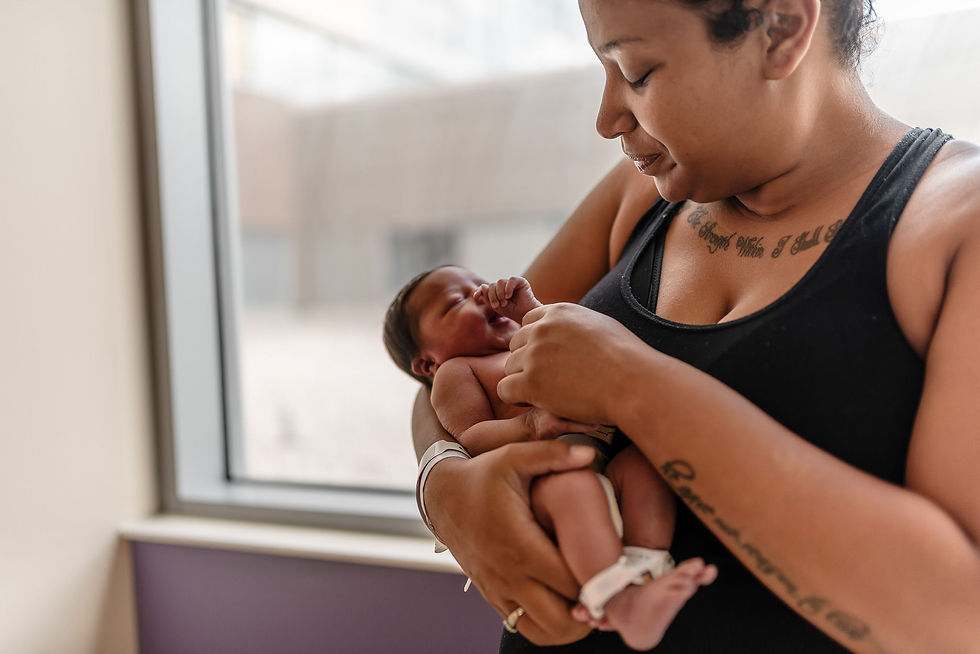
Skin-to-skin means placing your baby unclothed (except for a diaper) directly on your bare chest. You can be sitting up, reclining, or lying down, whatever feels safe and secure.
It might look simple. But inside both of your bodies, complex things are happening:
Baby's heart rate and breathing stabilize
Their blood sugar levels even out
Your milk supply gets a natural boost
Oxytocin floods your system (yep, the love hormone)
Stress hormones like cortisol decrease in both of you
That’s not just sweet. That’s biology doing its job.
Why Skin to Skin Still Matters After the First Hour
We put so much pressure on that first golden hour. And yes, it is important.
But you haven’t missed your chance at bonding if things felt rushed or interrupted.
Here’s the truth: every time you go skin-to-skin, you reinforce the connection between you and your baby. It tells their nervous system: you are safe. It tells yours: you are enough.
In the days and weeks after birth, skin-to-skin contact can help with:
Breastfeeding challenges (especially latching)
Postpartum anxiety and mood regulation
Baby's sleep and digestive issues
Soothing during witching hours
Repairing after separation (like NICU stays or unexpected procedures)
Think of it as your parenting power tool, always available, no batteries needed.
How to Make Skin-to-Skin Work in Real Life
Skin-to-skin doesn’t have to mean lying in bed for hours. (Though if you can swing that, do it!) Here’s how to weave it into your real postpartum life:
After a bath: Wrap you both in towels and cozy up together
During fussy evenings: Ditch the onesie and recline together
While feeding: Let baby nurse or bottle-feed on your bare chest
Naps on the chest: Let them rest heart-to-heart (while you stay awake or have a partner nearby for safety)
While baby wearing: If you're in your home, why not baby wear with no clothing between you and baby.
And yes, partners can do skin-to-skin too. This helps baby build secure bonds with both of you and gives your body a break.
If Your Golden Hour Was Disrupted, This Is for You
Maybe you had a cesarean. Maybe baby needed extra support. Maybe things moved too fast.
You’re not alone. And you didn’t miss the only chance to bond.
Go skin-to-skin today. Or tomorrow. Or next week. The window isn’t closed.
Because the magic isn’t in the moment. It’s in the message: I’m here. I’m yours. We’re okay.
What Skin-to-Skin Gives You, Too
Let’s not skip over this part.
Skin-to-skin contact isn’t just calming for your baby. It’s regulation for you.
It supports your healing. It reduces your stress. It softens the internal noise that says, I’m not doing enough.
In a season that can feel unsteady, it brings you both back to center.
And that’s the magic. Not just contact.
Connection. Confidence. Co-regulation.
Rebuilding Confidence After Birth
If you’re here, you might be navigating the early postpartum blur, wondering how to bond, how to heal, how to not feel like you're getting it "wrong."
Skin-to-skin isn’t a fix-all. But it is a gentle way to come back to your body. To remember you’re not starting from scratch.
You already have everything your baby needs. Sometimes you just need a reminder.
This is it.
Need deeper postpartum support?
If you're in the Hampton Roads area and want a postpartum doula who sees you as much as they see your baby, let’s talk.
Because skin-to-skin is powerful. But so is being witnessed, held, and supported through the full story of postpartum.


Comments